
Rohit Velankar
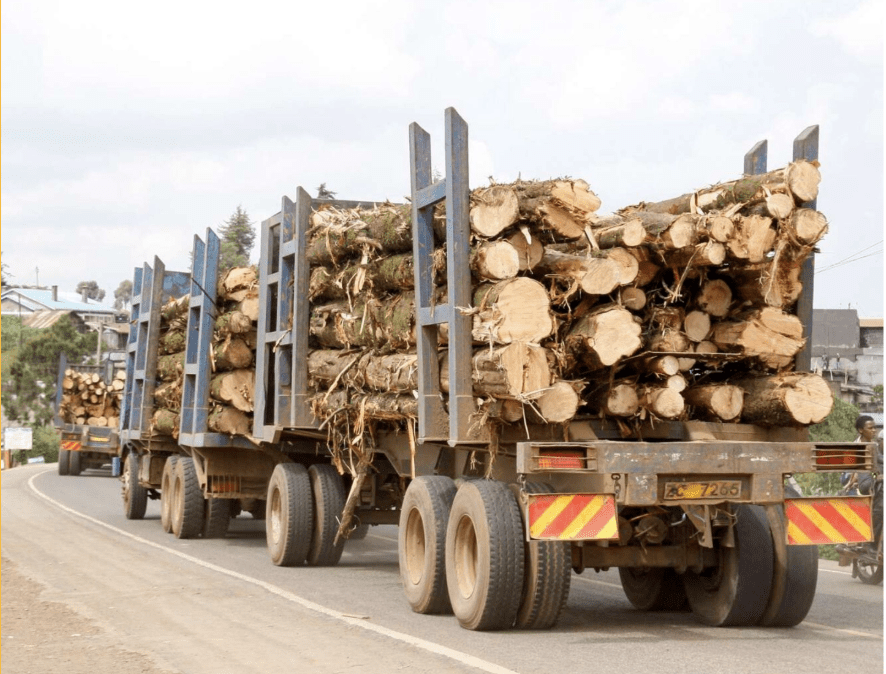
In 2023, at the African Climate Summit, Kenya’s President William Ruto, took the stage in front of his peers from across Africa and emphasized Kenya’s commitment towards conservation. But just two months prior, he lifted a logging ban that had lasted six years and had contributed to a recovery of forests across the country.
The contradictory policy seems paradoxical. While it is easy to make broad statements about “rampant corruption” and “crippling poverty” in “third world countries”, after considering the broader economic context, a more nuanced explanation arises: These are the growing pains of a young nation rapidly evolving from an exploited colony to a state with serious influence over its region and beyond.
For decades, highly industrialized countries have been exporting their pollution to lower-income countries. In some cases, this is a literal process called waste colonialism, in which, under the pretext of recycling, wealthy nations ship waste (anything from plastic bottles to decommissioned container ships) to poorer ones, where they are disposed of, through unregulated dumping or, in the case of ships, backbreaking and hazardous manual disassembly. More often, however, pollution exporting occurs when private firms move wasteful activities to developing nations to sidestep environmental standards. Usually, this means moving manufacturing offshore, as Western Nations have been relocating factories to China for decades. It also includes resource extraction activities in poorer regions, with the most infamous example being the cobalt mines in the Democratic Republic of the Congo (DRC) that fuel the Global North’s battery revolution.
Kenya has experienced its fair share of exploitation, namely through receiving plastic-wrapped bundles of secondhand clothes called “mitumba” that are sent with charitable intentions but ultimately are fated for dumping. While some of the clothing received does get good use, the one billion kilograms of clothing received between 2018 and 2023 is far too much, and eventually creates a burden of disposal. Kenya was also a site of unsupervised resource extraction at the hands of private companies approved by the British colonial government before the need for conservation was recognized after World War II.
However, early environmentalism was overshadowed by the mid-to-late 20th-century population boom, which increased demand for land, food, and fuel, motivating further deforestation, now sanctioned by Kenya’s post-independence government.
Currently, Kenya is divided on its environmental policy. The government has supported conservation efforts such as the Mikoko Pamoja mangrove rehabilitation efforts at Gazi Bay and the Kibwezi Forest habitat restoration, but it has also approved logging across the country. It has transitioned its energy grid to nearly 90% renewables, but continues to accept waste from higher-income countries, such as China, through its National Sword Policy, which China has rejected. At least one key to the puzzle lies in the most recent development in Kenya’s environmental policy. In October 2025, President Ruto lifted part of a logging ban in the Mau Forest, one of the most extensive indigenous forests in East Africa—his motivation was to end the import of wooden furniture from China, prioritizing domestic industries. And to make his intentions clear, he banned all furniture imports.
Kenya has experienced significant growth over the last few decades, driven by an economic transition towards technology and skilled services, particularly in the field of global finance. This mirrors the transition of countries like India, which in the 1990s saw the information technology, business, and finance sectors grow rapidly in parallel with economic liberalization and the associated increase in foreign direct investment. What has not grown in Kenya is manufacturing, which has seen only a minor increase since independence in 1963. This forces the Kenyan government to decide between resource extraction, which provides immediate economic growth, and conservation, which blocks an income source in the short run but may yield benefits in the long run. Ruto’s government has chosen the former in the hope of reducing Kenya’s reliance on external influences and building up the country internally. This provides some clarity on the conservation contradictions: the disconnect between rhetoric and action reflects an inability to prioritize economic growth and environmental sustainability equally.
However, one more factor lies in the shadows: the illegal logging business. In 2017, it was estimated that approximately 20% of the hardwood and 5% of the softwood timber imported by Kenya entered the country illegally. In 2024, it was estimated that Kenya was importing about 300 trucks of illegal timber (approximately 9,600 tons) per month from the Democratic Republic of the Congo (DRC), smuggled through the porous border with Uganda. It was even reported that significant quantities of timber flowed illegally into Kenya across Lake Victoria to circumvent land routes. And while the DRC is a substantial illegal importer of wood, Kenya has also reported an increase in legal imports from Tanzania and Uganda, although within each source country, the extraction operations are not always legal. Non-coincidentally, all of these nations that supply timber to Kenya are poorer than it in terms of GDP, and significantly poorer in terms of GDP per Capita (Kenya at USD 7,124 to Tanzania’s USD 4,135, Uganda’s USD 3,684, and DRC’s USD 1,810) [13]. (Note that in terms of growth, Kenya ranks slightly lower than its neighbors, but its market economy, coastal geography, and high stability have given it a significant head start above them.) Outside the timber market, Kenya has increased its imports of raw agricultural products, such as animal feed, mostly from poorer neighbors like Malawi and Zambia.
Considering this, along with the government’s move to enable logging not to support the extractive economy but the manufacturing one, we see that Kenya is reversing its role in the global economy. It is no longer an extractive economy, but an advanced one that uses poorer extractive economies to its benefit. The country that was once exploited for its resources by a larger developed power has naturally begun to do the same to the nations around it. This shift is not necessarily malicious; it aims to reduce expenses and promote economic growth.
The most prominent example of such a transformation is in China, where, although still a central hub for foreign manufacturing, it has begun expanding its industries into Africa as it has gained wealth. There are indeed greater political motivations behind China’s increasing activities in Africa, but the fact that private Chinese corporations are investing in Africa independently of the government also suggests that it is a good economic decision.
A better analogy to Kenya is Oman, which is undergoing its own transition from an oil-dependent economy to an independent one based on manufacturing and services. However, it has also struggled with issues related to sustainability and conservation, particularly in letting go of the lucrative hydrocarbon industry.
If Kenya continues along this trajectory, the next few decades may see its industries ramp up exports of higher-value goods to other African nations and exert greater economic influence over them and their raw materials. The only question is when those nations will begin to catch up.
 Global Eyes: A Student Publication