
Julianne needleman
China’s southernmost province of Guangdong has been embroiled in an outbreak of chikungunya, a potentially serious mosquito-borne disease, since July. With symptoms including fever, fatigue, and edema (swelling) of the lower limbs, the Chinese government and public health officials are alarmed by this yet-untreatable virus sweeping the densely populated southern region of the country, as it has accrued more than 10,000 reported cases so far. However, China’s response to this outbreak, which mirrors its response to the COVID-19 pandemic, has been criticized as authoritarian and excessive. These critiques themselves have been condemned as Sinophobic, especially considering the rise in anti-Chinese hate crimes that came with the COVID-19 pandemic, and could serve as a potential spark for another wave of Sinophobia in the West.
China Responds to Outbreak
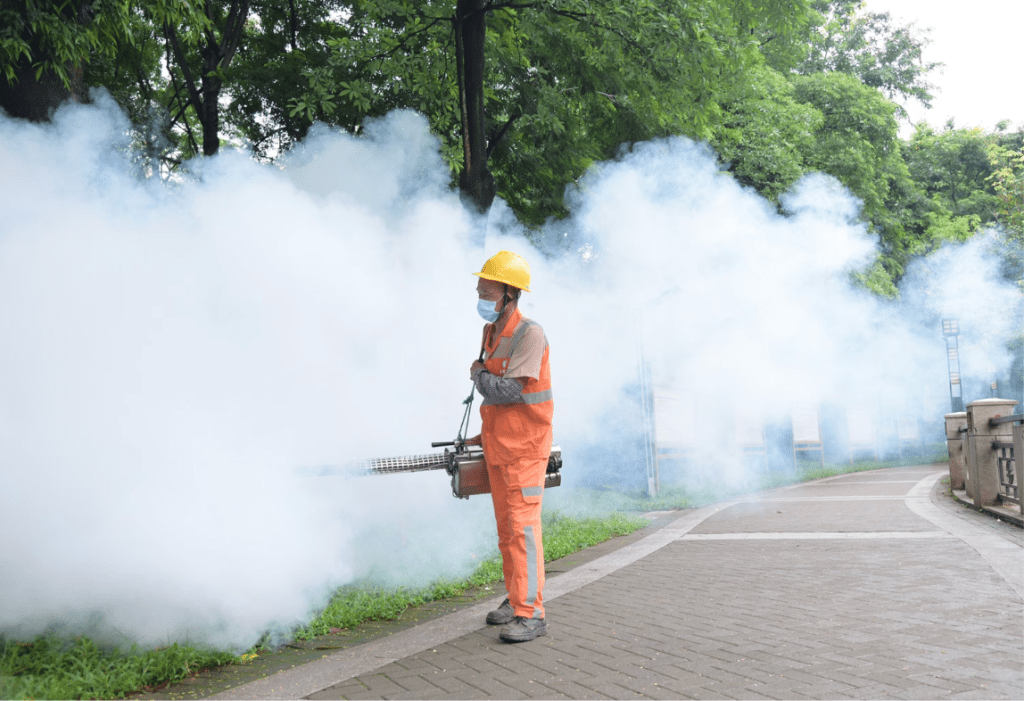
The government response to the outbreak has been swift and fierce, declaring war on the virus like it did in response to COVID-19. Soldiers fog the streets of Foshan, the epicenter of the outbreak, in thick clouds of insecticide to massacre the mosquitoes responsible. Those testing positive for chikungunya are forcefully hospitalized and quarantined. One Foshan mother reported public health officials entering her home while at work and taking blood from her children without her consent. These mitigation techniques mirror those used during the height of the COVID-19 pandemic; however, unlike COVID-19, chikungunya doesn’t spread through respiratory droplets. While the strain circulating in Guangdong is more transmissible than others, there is no evidence to suggest it is more virulent or fatal than any other strain of chikungunya, which has an overall mortality rate of less than one in one thousand cases.
But for this outbreak, does the end justify the means? Globally, chikungunya doesn’t pose as large a threat as other mosquito-borne viruses like dengue fever and malaria. While in rare cases chikungunya can cause complications like encephalitis, the vast majority of cases are mild. Dengue fever and malaria, however, claim 25,000 and 600,000 deaths per year respectively compared to chikungunya’s 213 in 2024. It also certainly is not as virulent or contagious as COVID-19, whose pandemic response this one is mirrored after. Moreover, China has comparatively few cases of chikungunya compared to countries in Latin America, especially considering its population of over one billion people. Brazil is the global epicenter of the 2025 chikungunya outbreak with over 180,000 cases across the country, while China has roughly 10,000 cases so far centered in Guangdong.
The West Reacts
The global reaction to China’s response to this outbreak, especially from countries in the Global North like the United States, has been largely negative. China’s reputation on the world stage is that of a nominally communist nation that allied with the USSR during the Cold War and one that has recently ascended to economic super-power-dom since the turn of the millennium. China’s growing economic and cultural influence globally has deepened the rift between it and the West, with anti-Chinese sentiment growing among European and North American countries.
Countries in the West have criticized the Chinese government’s response to this outbreak as repressive, especially considering that it has seen relatively few cases compared to countries in the Americas like Brazil. Alarm bells have also been raised about possible infringements on privacy rights. Pharmacies in Guangdong are now required to report all sales of medications treating fever to the government, which is presumed how certain citizens are targeted for forced blood tests. This response mirrors, albeit on a smaller scale, China’s response to COVID-19, which was deemed their “zero COVID” policy. This policy also involved strict find, test, trace, and isolate methods and forced quarantining of those who test positive, which have similarly been criticized as excessive and draconian since 2020.
However, this collective Western reaction has garnered pushback from some who claim it is based in Sinophobia, or anti-Chinese sentiment. China has long been a target for the West to blame outbreaks on, whether viral like COVID or political like Maoist communism, taking on the role of a cultural and political boogeyman in direct opposition with the values of Western countries. This mindset is a staple in Western conceptions of and attitudes towards China. Rumors of Chinese immigrants in San Francisco spreading disease were used to justify the Chinese Exclusion Act of 1882, which barred Chinese laborers from working in the United States for ten years, the first act of its kind to target an entire ethnic group. The alarm over China’s handling of chikungunya has been called an uncritical continuation of the West’s disease-oriented prejudice against China and Chinese people.
Rising Sinophobia Could Spell Violence
The aftermath of the COVID-19 pandemic saw staggering rates of Sinophobic hate crimes in countries like the US and the UK. These attacks were spurred on by far right figures like Donald Trump, who used the racist epithet “kung flu” to refer to the virus, and Nigel Farage, who called for the West to “reconsider” its relationship with China and its diaspora, pinning blame for the virus on Chinese people in China and abroad instead of reasonably critiquing the Chinese government for its handling of the outbreak. These statements were not made in a vacuum – they came at a time of growing Sinophobia spurred by COVID-19’s popular association with China, and only served to add fuel to that fire. 2021 saw violent, public, targeted attacks against members of the East Asian diaspora living in the West, especially against women and elders.
China and Chinese people have long been stereotyped in the West as dirty and disease-carrying, as well as authoritarian and draconian. Those stereotypes intersected with the COVID-19 pandemic to violently ignite long-simmering Sinophobia with real consequences for East Asian diaspora communities in the West. Experts worry that this recent chikungunya outbreak and the Chinese government’s response to it could serve as a similar spark for Sinophobic violence, especially as the West has grown more xenophobic in general in recent years. What often accompanies moral panics like these is an inability to distinguish the actions of the Chinese government from the Chinese people and diaspora communities in the West, which manifests itself as senseless acts of violence, as was seen following the COVID-19 pandemic. The fear and stigma that spread alongside these viruses can be just as contagious, and sometimes just as deadly, as the viruses themselves.
 Global Eyes: A Student Publication