
brenna mancini
What is Isolationism?
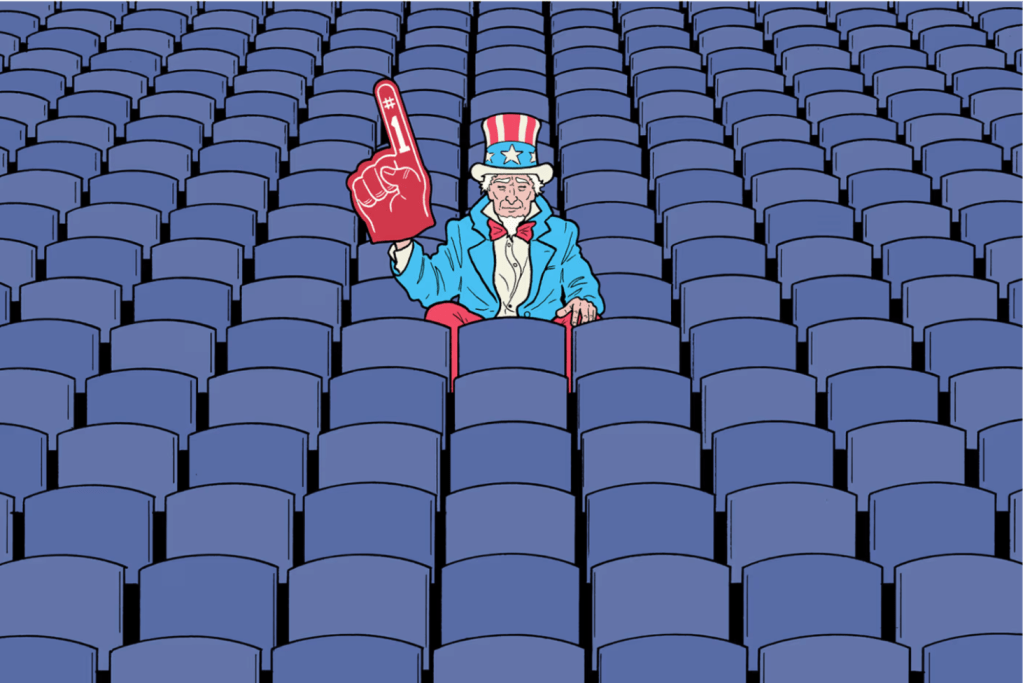
Isolationism refers to a foreign policy ideal that promotes independence and disengagement from foreign affairs. With a largely negative connotation, this ideological shift may indicate the collapse of certain international relationships. The term gained prominence in early 20th-century U.S. policy debates, particularly prior to World War II. Isolationist sentiment in the United States was prevalent until the bombing of Pearl Harbor. Even then, the United States’ future involvement in WWII was primarily reactionary.
Isolationism is not a modern issue. China experienced centuries of isolationist ideals during the Qing Dynasty (1644–1912), imposing policies known as ‘Haijin’ that banned sea trade. Taiwan has been experiencing diplomatic isolation since the 1990s as the country fights to maintain its democracy. The Democratic People’s Republic of Korea utilizes isolationism to maintain control over its citizens.
Isolationism is defined by its six distinct characterizations and goals. Isolationist countries focus heavily on their military and domestic security. They also look to act as redeemer nations–nations that work towards returning to what they deem a “simpler time.” Isolationism also focuses on liberty, both nationally and abroad. Preserving the nation’s status quo policies and promoting peace are two other major goals of isolationist countries.
What Explains This Shift?
One of the greatest explanations for this isolationist shift is the overarching ideological migration in international relations. As the individualistic mindset becomes more accepted, isolationism is no longer the scarlet letter it once was. Furthermore, it is virtually impossible for a country to unilaterally act on a foreign policy issue. This creates the illusion that global superpower states no longer exist. When a country feels that it lacks the independence and decision-making it once had, it feels threatened. In the case of the United States, there is a core belief that the country is not focused enough on itself. There is a shifting belief that globalization and heavy involvement in foreign affairs take away a state’s power. While independence is extremely important for sustaining a state’s sovereignty, too much independence is possible.
The United States is one of the foremost examples of an isolationist shift. With the recent inauguration of President Donald Trump, the country has seen many foreign policies implemented that show signs of this. The US-China trade war is currently being exacerbated as President Trump imposes high tariffs, stating he has no intention of repealing them. The United States has recently approached diplomatic relations aggressively, further pushing away countries and straining alliances. While the United States is often considered to be the world’s greatest superpower, the country still has its economic and diplomatic limits.
One example of this occurred during the 2008 Financial Crisis. Many countries experienced a massive recession, threatening their financial systems and economies. To help alleviate this issue, China assisted many countries through financial aid. This caused great concern within the United States, with many feeling that China’s economic assistance proved its might over the United States. Although the United States would never have the ability to solve this crisis on its own, many interpreted China’s intervention as a failure of the United States to solve the issue unilaterally.
Public opinion is also shifting largely towards an isolationist mindset. Across many countries in North America and Europe, people are concerned about immigration. There has been a recent rise in anti-immigration sentiment. In the United States, consumers have expressed concern about an over-reliance on foreign production, specifically from China. Additionally, concerns grow over the amount of national spending allocated to international issues rather than domestic necessities.
With the country experiencing extreme inflation rates, citizens are left feeling ignored and abandoned.
How Will This Affect International Relations?
One of the largest actions taken by the United States was its freezing of USAID. This has massively moved the country towards isolationist tendencies, with many countries already feeling the effects. African countries like Ethiopia, Tanzania, and Kenya have already expressed the disastrous effects this has had and the public health crises it will exacerbate. Many programs like HIV research can no longer continue without the financial support of the United States. With the tens of billions of dollars being ripped away from African countries, it is unknown what long-term effects this may have and how many lives will be lost because of it. Ukraine has experienced one of the greatest losses, heavily relying on financial support as its war with Russia continues. The withdrawal of USAID is deeply felt on an individual level as healthcare and research programs across the globe have been slashed.
In Europe, many countries are shifting away from a European identity and solely basing it on their nationality. This is evident in the United Kingdom’s 2016 decision to leave the European Union. This came as a shock to the rest of the world, but nobody is more shocked than those in the United Kingdom. While the Brexit decision was based on a vote, many failed to consider how leaving the European Union would harm them. This isolationist move significantly harmed the United Kingdom’s economy. Many citizens lost their jobs and the economy became significantly smaller. The harsh reality of the Brexit decision has encouraged many countries to remain in the European Union, not because of their loyalty to it, but rather economic concerns.
 Global Eyes: A Student Publication