
zoë perri
Introduction
The beginning of February 2025 consisted of a flurry of news from both the World Health Organization (WHO) and the Democratic Republic of the Congo (DRC) in regards to the supposed “Disease X”. According to officials, the disease spread rapidly in the Boloko village of the Equateur province, killing many. What truly grabbed global attention were the hemorrhagic fever-like symptoms present in multiple cases. Upon further investigation, the Ministry of Health, supported by the WHO, ruled out both Marburg and Ebola viruses. Since the development of these cases, officials have now begun to consider either a chemical contamination in the village or bacterial meningitis outbreak.
What does this have to do with a humanitarian crisis? Soon after the outbreak occurred fear mongering persisted throughout the media. Many publications almost immediately labeled it a mystery disease, causing panic as discussions of the chance of a possible new pandemic or novel disease circulated. Due to the lack of immediate knowledge on what exactly was spreading, the media took this story by storm. Even when the outbreak was relatively contained, and remote, Western news outlets reported it as if it were spreading globally.
Although the WHO and local health agencies’ reactions were necessary for highlighting the possible severity of a novel disease, the focus on the DRC grew without much attention to its ongoing crisis. With the globe’s recent attention on the DRC, it is imperative to consider the implications of ongoing emerging and endemic diseases as its decade-long humanitarian crisis poses a risk for further disease spread, humanitarian needs, and refugee crises.
The Crisis and M23
The United Nations High Commissioner for Refugees released its Global Appeal 2025 Situation Overview outlining the current crisis within the DRC. As well as the events that have contributed to decades of conflict. Since the late 1990s conflict has waged in the DRC. On the Eastern border fighting between rebel non-state armed forces and Congolese forces has created a devastating and complicated humanitarian crisis. These hostilities began during the first and second Congo Wars and continue today as the Kivu conflicts waged calamity. During the wars, immigration of Rwandan Hutu refugees across the eastern border has raised tensions between Hutu extremists and Tutsi groups. From 2003 onward rebel groups have violated humanitarian rights and committed violent acts on the eastern front of the Congo. Since then, the mass displacement of Congolese people due to the ongoing conflict has projected 27 million in need of care, and roughly 7 million people seeking refuge in neighboring countries.
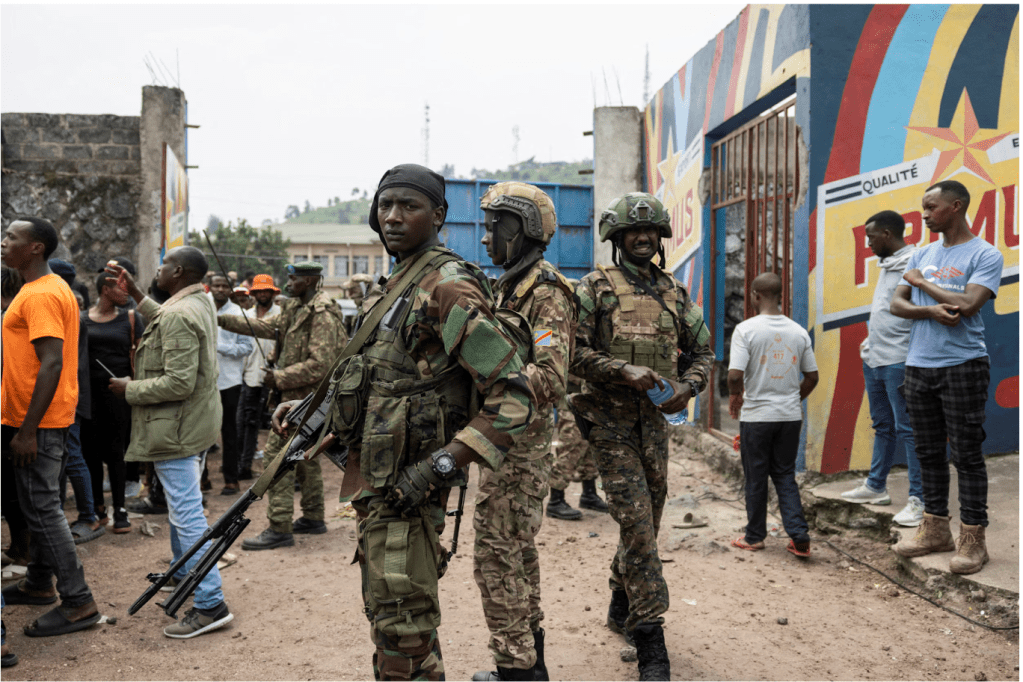
Throughout the past year, the rebel group March 23 Movement, also known as M23, has continued to commit international and humanitarian law violations. The destruction of civilian life is extensive and the state of the country continues to grow weaker as government forces push back on M23 movements. As noted by the global conflict tracker, the Congo faces diminishing relations with Rwanda as tensions rise similar to those during the Second Congo War.
These destructive acts reach far beyond the eastern border and beyond the congolese government. The rebel groups have been responsible for sexual violence, assault, and mass killings of Congolese civilians. On top of these crimes, M23 has further introduced recruitment campaigns in which young men – some being 14 or 15 years old – have been enlisted into the fighting. In some cases, reports of abduction have occurred, as well as forcing youth to risk their lives for a fight that is not theirs. The vast amount of conflict in the region poses a serious risk for increasing infectious disease rates among both forces, civilians, and refugees.
Migration into Surrounding Countries
With M23’s presence throughout the DRC vast migration has occurred. It is estimated that over one million Congolese civilians have sought refuge in surrounding countries. These countries include: Angola, Burundi, the Republic of the Congo, Malawi, Rwanda, South Africa, Uganda, the United Republic of Tanzania, and Zambia (UNHCR). The humanitarian crisis has forced mass displacement in and out of the country. Most recently, as Goma fell in late January 2025, civilians desperately fled the area as M23 devastated the region. According to the UN an estimated 900 to 2,000 people were killed. While unilateral ceasefires were made on February 4, 2025, the distress caused by Goma has sent displacement up again.
Another primary concern for the bordering countries is the relationship between Rwanda and the DRC. As mentioned previously, it is not very hospitable. Rwanda has managed to cultivate some military action on the eastern border of the DRC. With this, some Rwandan groups have shown support for the M23 efforts. Similarly, both Rwanda and Uganda profit from Congolese tantalum mines that have helped fund M23 efforts. This ongoing complexity is only heightened with the number of DRC civilians migrating to Uganda and Rwanda.
Spread of Disease
Within the DRC, multiple diseases are endemic such as malaria and mpox, as well as a significant burden of disease with ongoing outbreaks such as Ebola, Marburg, cholera, and measles. These are just a few of the prevalence throughout the country. Moreover, the diseases listed above are highly prevalent in areas such as the eastern border, which has high rates of conflict. In conflict-prone areas, weak infrastructure, poor sanitation, and malnutrition are all factors that increase the likelihood of disease transmission. This is extremely alarming when considering the migration throughout the greater region.
As noted, the DRC has faced an uptick in infectious diseases in 2025. The influence of Western media made the transmission of the supposed unknown illness in February widely known and highly concerning. The attention called for considering the state of malaria in the country and the government’s ability to mitigate contaminated water sources. Yet this flurry of news glossed over one of the most concerning aspects of war. With conflict the spread of disease is bound to occur. Since the new year, continued outbreaks of disease have been circulating within the region. Conflict in the area has only exacerbated mpox transmission throughout eastern DRC.
According to the UNHMC, the recent capture of Goma by rebel M23 forces has led to the creation of an epicentre of mpox along the eastern border of the country. During the fighting many local hospitals were swept up in the conflict. As a result, approximately 600 mpox patients fled the area in hopes of survival elsewhere. The fleeing has since created an approximate 31% case increase and a total of 16,255 cases in the eastern border of the DRC.1
One of the most crucial aspects of these cases is that mpox fatality rate increases as resources dwindle. So areas such as conflict zones, war, and refugee sites are perfect for transmission and further spread. Due to a lack of public health infrastructure as a result of the current conflicts, delays in disease detection and response stem from poor healthcare conditions. Therefore, conflict in the area only further extends the suffering from both the rebel groups and increases the risk of transmission. Consequently, diseases such as mbox, malaria and ebola are only going to further transmit as conflict expands and innocent people flee.
Where conflict zones arise, infections surge as war and displacement dismantle health systems. In the case of the DRC increased infrastructure, aid, and resources are all needed for the betterment of these populations. Although recovery is typically attainable for mpox it is necessary that areas of conflict have proper infrastructure for aid to ensure that vulnerable populations receive help. The correlation between immigration, disease, and conflict is inevitable. So, with increasing outbreaks of both emerging and reemerging diseases in this region adequate steps need to be taken to mitigate the damages against humanity.
 Global Eyes: A Student Publication